Skip to content
Logo
search
  • Features
    • Overview
    • AI Role Play
    • Content Authoring Tools
    • AI Course Generator
    • SCORM Compliant LMS
    • Integrations
    • Pre-Loaded Courses
  • Solutions
    • Learning Management System
    • LMS Mobile App
    • Learning And Development Platform
    • Learning Experience Platform
    • People Development Platform
    • Corporate Training Platform
    • Training Management System
    • Content Creation Services
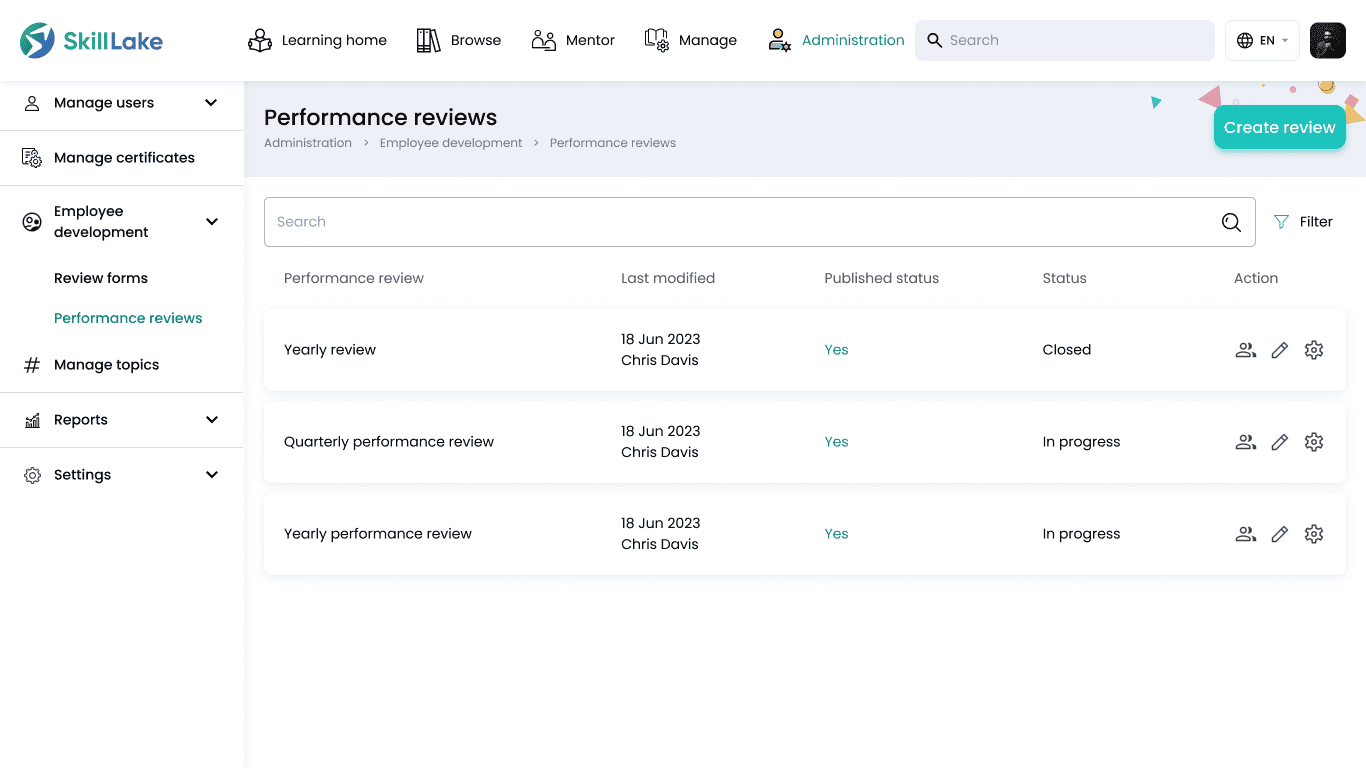
    • Performance Review System
  • Resources
    • Case Studies
    • Blogs
    • Help
    • Use Cases
    • videos
    • Downloads
    • Release Notes
  • Industries
    • Info Tech
    • Construction
    • Manufacturing
    • Non-Profit
    • Hospitality
    • Energy
    • Insurance
    • Retail
    • Automotive
    • Franchise
    • Telecom
    • Healthcare
    • Restaurant
  • Pricing
  • Company
    • Partners
    • About Us
  • Contact Us
  • search
  • Request A Demo
×
  • Features
    • Overview
    • AI Role Play
    • Content Authoring Tools
    • AI Course Generator
    • SCORM Compliant LMS
    • Integrations
    • Pre-Loaded Courses
  • Solutions
    • Learning Management System
    • LMS Mobile App
    • Learning And Development Platform
    • Learning Experience Platform
    • People Development Platform
    • Corporate Training Platform
    • Training Management System
    • Content Creation Services
    • Performance Review System
  • Resources
    • Case Studies
    • Blogs
    • Help
    • Use Cases
    • videos
    • Downloads
    • Release Notes
  • Industries
    • Info Tech
    • Construction
    • Manufacturing
    • Non-Profit
    • Hospitality
    • Energy
    • Insurance
    • Retail
    • Automotive
    • Franchise
    • Telecom
    • Healthcare
    • Restaurant
  • Pricing
  • Company
    • Partners
    • About Us
  • Contact Us
  • search
  • Request A Demo

Category: Blogs

Learning Paths

Training is crucial for employee development and promoting a learning culture within the organization. Employees who attend training can enhance their skills and become more capable of handling complex tasks. It also ignites employee commitment, making them feel valued, and when employees receive training regularly, their morale and loyalty increase. Realizing the importance of L&D in building a learning culture and fostering employee commitment, most organizations conduct training regularly.

Statistics state that even after spending an average of $1,280 on employee training, not more than 12% of employees use the skills effectively. This glaring mismatch underscores a fundamental problem – standardized training methods fail to deliver meaningful results and drive business success. However, according to recent studies, top-performing organizations have realized that personalized learning paths help organizations overcome shortcomings.

The blog will help you recognize the top ways to use customizable learning paths for effective corporate training. 

What are Customizable Learning Paths? 

Customizable learning paths are a strategic approach where learners dive into a tailored mix of courses crafted to enhance learning outcomes based on their unique needs, preferred learning styles, and goals.

learning
Customizable Learning Paths on Skill Lake

Why Customizable Learning Paths?

Tailored Learning Objectives

Customizing learning paths for corporate training enables organizations to tailor employees’ development to their specific roles or career aspirations. Employees understand what they must achieve by defining clear learning objectives and fostering engagement and motivation. When objectives are personalized, employees can see the direct relevance of their learning journey to their professional growth, increasing their commitment to the process.

Personalized Learning Tracks

Providing flexibility in learning paths empowers employees to take ownership of their development. Personalized recommendations or assessments guide individuals towards suitable learning tracks, optimizing their time investment in areas most beneficial to them. This approach acknowledges diverse learning styles and preferences, enhancing engagement and retention as employees engage with material in ways that suit them best.

Adaptive Content Delivery

Customizable learning paths for corporate training ensure adaptive content delivery, accommodating individual learning styles and preferences. Diverse content formats ensure employees can engage effectively, promoting better retention and understanding. With tailored content delivery, organizations can create a more individualized learning environment. When the training is personalized, it caters to each employee’s unique requirements and preferences. 

Agile Skill Development

Customizable learning paths enable employees to adapt their development based on changing job roles or skill demands. This agility ensures that their skills remain relevant to the organization’s needs, contributing to agility and innovation. Businesses supporting flexible skill development and maintaining competitiveness in fast-paced markets can better adapt to changing business needs.

Continuous Feedback and Improvement

Integrating mechanisms for continuous feedback and assessment enables employees to track their progress and identify areas for improvement. Iterative improvements based on this feedback ensure that learning paths remain effective and aligned with organizational objectives. This approach fosters a culture of continuous improvement, enhancing overall organizational performance.

Learning Journal 2
Continuous feedback on Skill Lake

Performance-based Learning

Designing learning paths for corporate training focusing on performance outcomes ensures that employees develop skills directly applicable to their roles. Learning paths that align with performance measures emphasize how crucial skill application and acquisition are to the success of organizations. This approach focuses on the practical application of knowledge, which improves employee performance and contributes to overall organizational effectiveness.


Checklist for Implementing Customizable Learning Paths

Identify Individual Learning Needs

Determining each person’s specific learning needs is a necessary first step in creating a personalized learning journey. Several techniques, including performance reviews, self-assessment instruments, and enlightening interviews, are used in this fundamental step. Organizations can determine their learners’ strengths, weaknesses, and preferences to effectively customize training programs to meet their specific needs.

Design Customized Training Programs

Creating a personalized training program comes next after the initial assessment. This entails picking appropriate resources and content with care, using successful instructional techniques, and offering assistance and feedback on an individual basis. In addition to meeting each student’s unique learning needs, the training program must align with the organization’s overarching goals.

Implement Customized Learning Paths

Once the training program is designed, the next stage is implementation. This phase includes granting learners access to necessary training materials and resources, guiding them through their learning journey, and closely monitoring their progress. A well-structured implementation ensures learners have a seamless and enriching experience while receiving the support they need.

Evaluate Training Outcomes

Assessing learning outcomes is crucial for evaluating the effectiveness of learning pathways. Organizations should refer to performance metrics, compare them before and after implementation, and leverage modern technology and feedback mechanisms. This helps organizations to ensure that their learning pathways improve employee skills and performance.


The Role of Learning Management Systems in Customizable Learning Paths

Learning Management Systems (LMS) feature a student-centered approach, flexible content delivery options, strong progress-tracking capabilities, and adaptive learning algorithms. By utilizing these characteristics, organizations can design individualized, interesting learning programs that are suited to the requirements of each learner. This fosters a culture of continuous growth and success.

Skill Lake: A Real-life Example

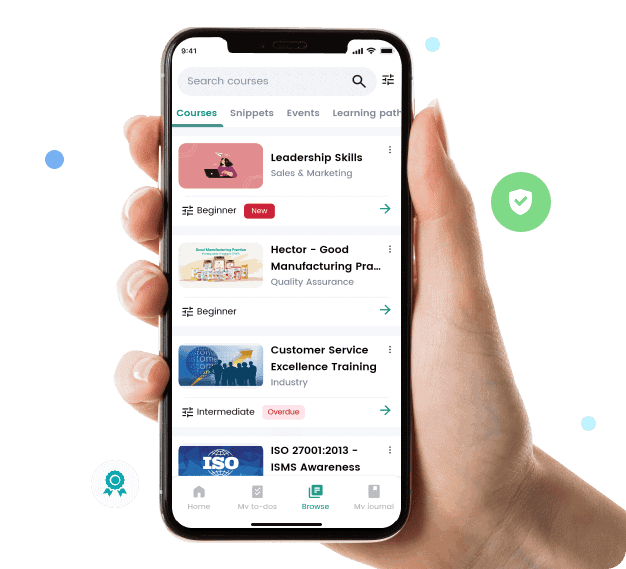
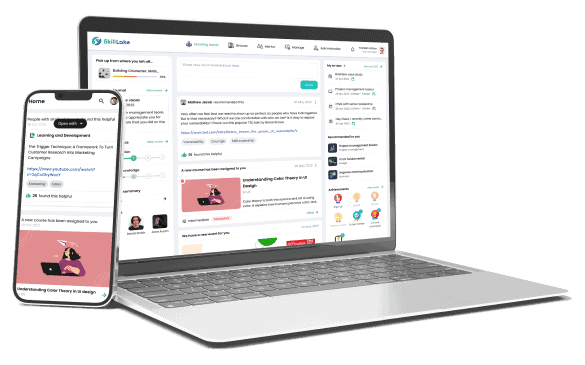
Skill Lake is an ideal platform for a tailored Learning Management System (LMS) due to its comprehensive approach to modern learning trends and best practices. It promotes learning accountability through self-paced learning and mentor monitoring, enhancing knowledge retention through microlearning principles. It accommodates diverse preferences and schedules by offering multiple learning modes, including synchronous, asynchronous, and blended options. Its intuitive mobile apps ensure accessibility and convenience for learners anytime, anywhere. 


Conclusion

Customizable learning paths represent a transformative approach to employee development, addressing the shortcomings of traditional training methods. By tailoring learning experiences to individual needs, preferences, and career aspirations, organizations can drive higher engagement, motivation, and skill retention among employees. Implementing personalized learning fosters a culture of continuous improvement and ensures alignment with organizational objectives, ultimately leading to enhanced performance and business success.

Explore Skill Lake today and discover ways to drive excellence with effective corporate training. Request for a Free Demo now!

Sachin Krishna

Sachin is a passionate advocate of e-learning with a profound knowledge of the field. He regularly writes compelling content that captivates readers and works to spread awareness of learning solutions.

Other Reads from Skill Lake

  • Top LMS Training Platforms for 2026: 10 Best Solutions for Corporate Learning

    Top LMS Training Platforms for 2026: 10 Best Solutions for Corporate Learning

    Legacy corporate training frameworks are failing to solve contemporary skill gaps. To build an agile, future-ready workforce, organizations need a modern corporate training LMS that drives active capability mastery. This post evaluates the top LMS training platforms for 2026 currently delivering measurable operational ROI. Top 10 LMS Training Platforms for 2026 Note: Pricing and features

    Read More
  • How AI Simulation Training in LMS Prepares Teams for Real-World Scenarios

    How AI Simulation Training in LMS Prepares Teams for Real-World Scenarios

    Traditional corporate training methods often fall short when preparing employees for high-stakes, real-world challenges. Today’s business landscape demands a drastic shift from passive consumption to active mastery. This is why forward-thinking business leaders are adopting simulation-based learning in LMS to bridge the gap between theory and execution. By integrating advanced AI role play training, organizations

    Read More

    Stay up to date on the latest in HR and L&D


    Highlights of Skill Lake

    • AI/ML Powered Course Recommendations
    • Courses with AR/VR Experiences
    • Competency & Course Management
    • Multiple Learning Modes
    • Mentoring & Feedback
    • Gamification
    • Learning Bytes
    • Mobile App
    • SCORM Compliance
    REQUEST A DEMO

    Highlights of Skill Lake

    • Sell-Paced & Instructor-Led Learning
    • Tracking & Reporting
    • Mentoring
    • Gamification
    • Learner Dashboard
    • Course Library
    • Enterprise IT Ready

      [recaptcha]

      Highlights of Skill Lake

      • AI/ML Powered Course Recommendations
      • Courses with AR/VR Experiences
      • Competency & Course Management
      • Multiple Learning Modes
      • Mentoring & Feedback
      • Gamification
      • Learning Bytes
      • Mobile App
      • SCORM Compliance
      • Multi-Cloud Hosting

        Watch Skill Lake in Action!

        REQUEST A DEMO

        Customer Training

        What can customer training do for your business? 

        Beyond helping your customers better understand your products and services, training makes them self-reliant in solving problems, improving brand trust, and speeding up word-of-mouth referrals. 

        According to research by TSIA, trained customers are 68% more likely to use a product frequently, 56% more likely to explore features, and 87% more likely to solve issues independently. These statistics show comprehensive training empowers customers, fosters loyalty, and improves user experience. A study by Forrester also shows companies investing in customer training experience an increase in customer satisfaction by 11.6%. 

        Customer training is imperative! But how can companies drive effective customer training? This blog explains how a robust LMS can help streamline customer training management. 

        How can large companies effectively conduct customer training?

        Gone are the days when companies used PDFs and user guides for customer training. As technology improves and people want more from training, businesses are using Learning Management System Software (LMS) for better training experiences. LMS helps deliver training that’s effective and engaging for users. Let us discuss how.

        1. Onboarding and Product Training:

        A customer training LMS can streamline onboarding new customers by providing them access to comprehensive training modules. These modules can cover various product or service aspects, including features, functionalities, best practices, and use cases. Including Interactive Multimedia Content such as quizzes, games, and assessments avoids sluggishness and makes learning exciting. When learning becomes exciting, customers quickly understand the products or services, speeding up the onboarding.

        2. Ongoing Support and Skill Enhancement: 

        After the initial onboarding process, an LMS can help continue customer support and skill development. The platform allows Customers to access a library of tutorials, troubleshooting guides, and training materials. This helps them with any questions or problems they might have when using the product or service. The LMS can also provide advanced training courses or certifications to assist clients in gradually advancing their knowledge and proficiency. The LMS helps users stay informed about new features, updates, and industry best practices by offering opportunities for continuous learning. This eventually boosts user satisfaction and loyalty.

        What are the Benefits of LMS for Customer Training?

        The benefits of using LMS for customer training are immense. Here are a few top reasons to implement an LMS for customer training. 

        1. Monitoring Learner Progress and Evaluating Performance

        A comprehensive reporting and analytics suite within an LMS offers detailed insights into the effectiveness of training programs. Targeted support can be provided to learners struggling in specific areas by tracking completion rates, attempts, and scores, fostering continuous improvement.

        2. Scalability

        An LMS effortlessly accommodates a growing user base without additional resources. This scalability facilitates reaching a wider audience and executing global training initiatives seamlessly.

        3. Flexibility and Convenience

        Customers can learn at their own speed, anywhere, on any device. Users can access training materials whenever it’s convenient for them. This convenience increases user engagement and completion rates and enhances information retention.

        4. Enhanced User Engagement and Participation

        LMS for online customer training has personalized dashboards that empower users to track their progress and explore additional courses, encouraging active participation. Integrating multimedia content, microlearning modules, and social learning experiences enhances engagement and promotes knowledge retention.

        Key Considerations for Choosing a Customer Training LMS

        1. Intuitive User Interface

        An interface that is easy to use is essential to increasing content adoption and engagement. Find an LMS with an innovative, intuitive user interface indicative of well-known consumer software platforms. An intuitive LMS allows users to access content without technical knowledge.

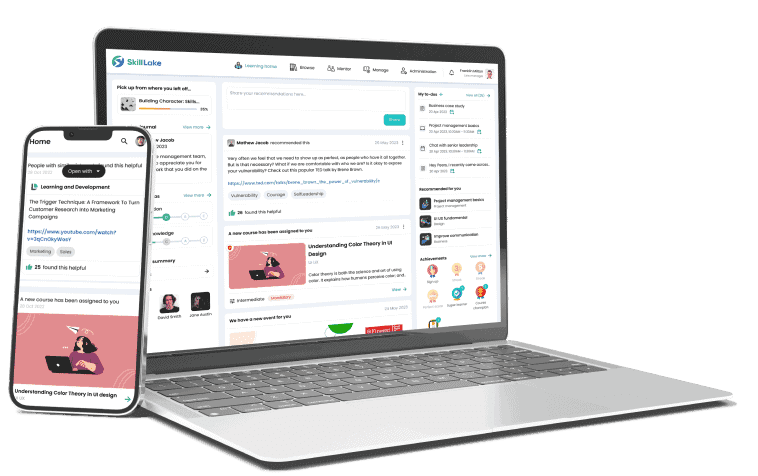
        Laptop mobile screens


        2. Flexible Content Delivery

        Creating a training program that suits diverse learning preferences is essential.  An LMS that accommodates diverse content types such as videos, PDFS, interactive media, etc., tailor helps businesses customize training programs for diverse learners. 

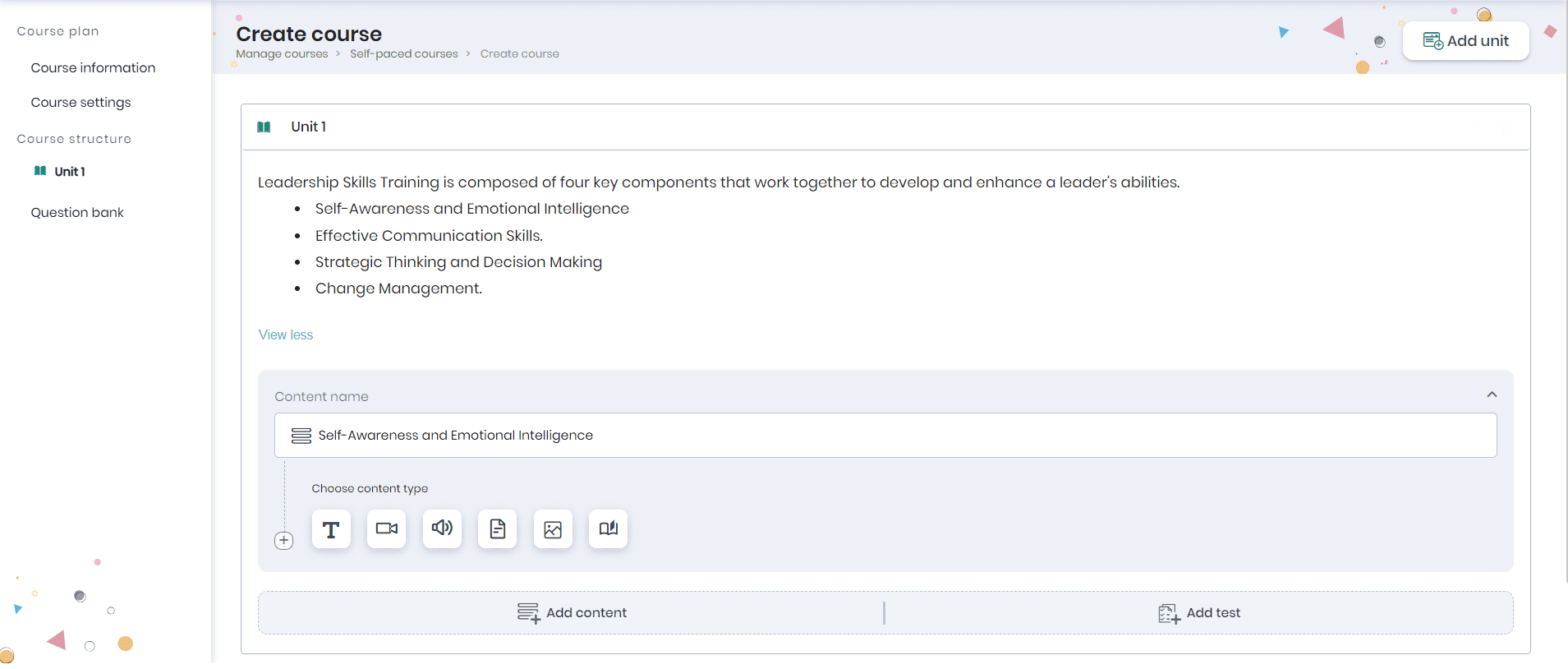
        scorm 3
        Content Authoring Tool on Skill Lake

        3. Gamification

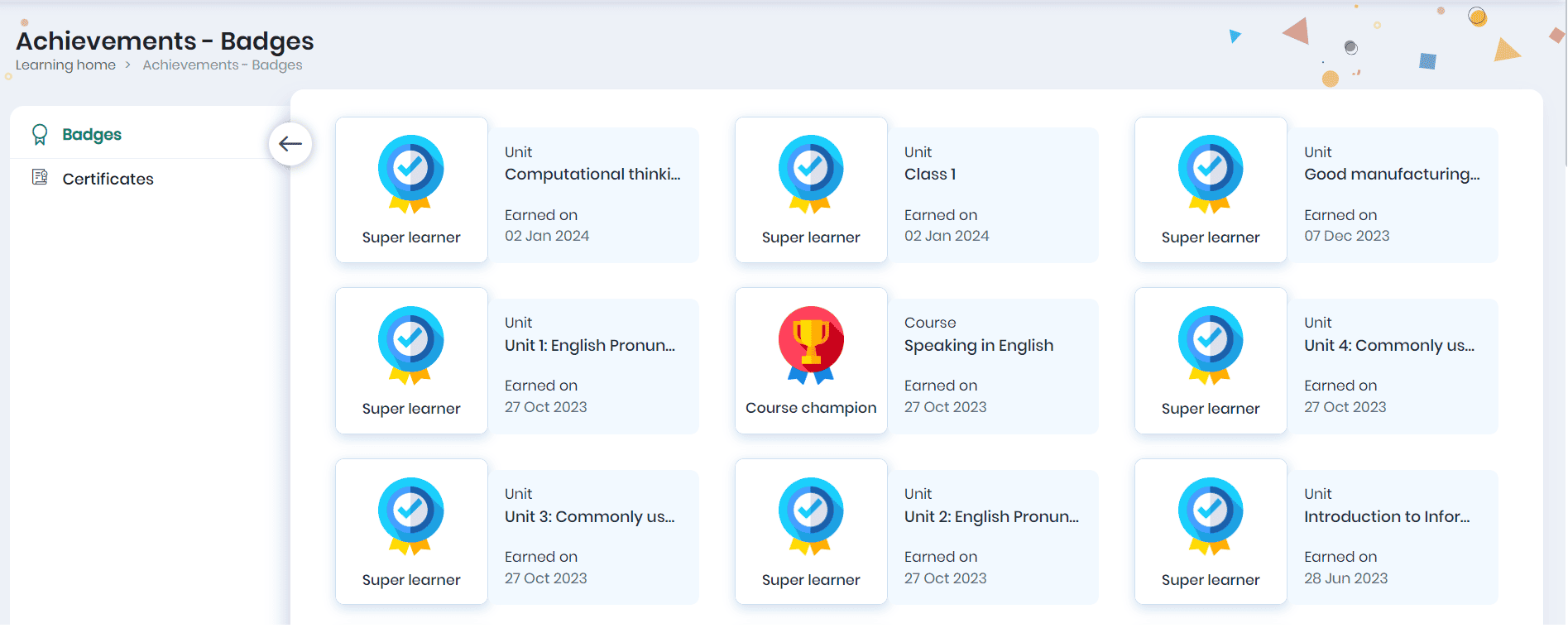
        Training sessions must be exciting and engaging to increase participation, create a positive learning experience, enhance skill development, and more. The training program incorporates gamification elements like badges, quizzes, and leaderboards. Choosing an LMS with gamification features makes the learning experience competitive, enjoyable, and rewarding, leading to better learning experiences. 

        gamification 3
        Gamification on Skill Lake

        4. Mobile Learning Options

        Mobile learning options eliminate the need for physical classrooms, instructor fees, and travel expenses. It also offers a flexible learning experience, allowing learners to control their training sessions. When choosing an LMS, select the one that supports seamless access across different devices and operating systems that facilitates training anytime, anywhere. 

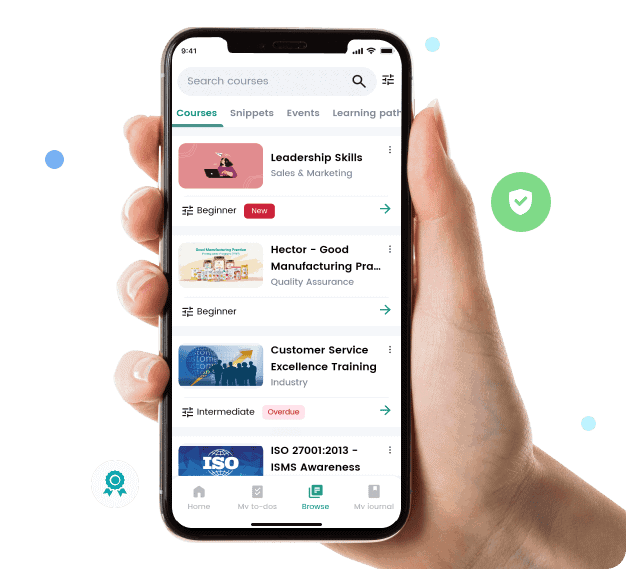
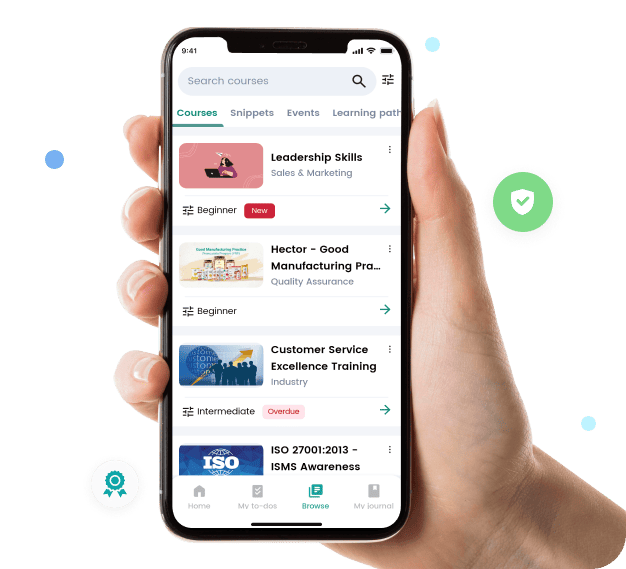
        LMS mobile app
        LMS mobile app of Skill Lake

        5. Custom & Recommended Learning Paths

        Personalization is essential for creating compelling and engaging training experiences. By tailoring the learning experience to individual needs, organizations can maximize the training results and empower their employees to reach their full potential. An LMS that allows customization makes learning more engaging and effective for learners and instructors. 

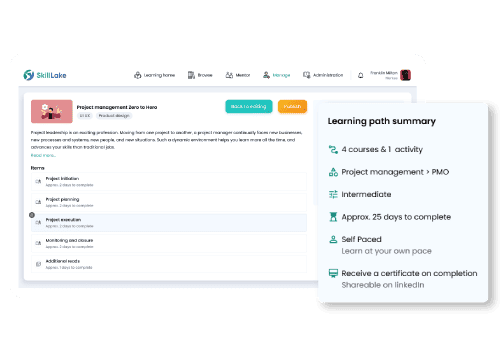
        500x300 Skilllake 9
        Customized Learning Path on Skill Lake

        6. Advanced Reporting

        Data-driven insights are essential for tracking training development and maximizing its impact. An LMS with strong reporting capabilities provides an in-depth analysis of user participation, completion rates, knowledge gaps, and the overall effect of training.

        7. Security

        Securing the confidentiality and integrity of training materials and user information is important. To ensure security, prioritize an LMS with strong security features like Single Sign-On (SSO) integration, granular access controls, data encryption, and compliance with industry standards.

        Is Skill Lake an Ideal Platform for Customer Training?

        Skill Lake excels as the premier platform for customer training, offering a transformative learning experience. Powered by advanced AI and ML, it tailors personalized learning paths to individual preferences, fostering effective skill acquisition. Immersive AR/VR experiences deepen comprehension of complex topics, while robust competency and course management tools enable tailored learning to meet specific objectives. 

        Skill Lake ensures continuous improvement by supporting various learning modes and providing mentoring and feedback. Gamification elements drive engagement, complemented by bite-sized Learning Bytes and mobile accessibility for convenient learning anywhere. SCORM compliance ensures seamless integration with existing systems, underscoring Skill Lake’s commitment to delivering impactful training experiences.

        Request for a free demo now!

        Ashmitha Chatterjee

        Ashmitha is a learning and development enthusiast who shares her insights on e-learning. She loves to create engaging and informative content and is dedicated to helping people learn and grow through her deep expertise in the field.

        Other Reads from Skill Lake

        • Top LMS Training Platforms for 2026: 10 Best Solutions for Corporate Learning

          Top LMS Training Platforms for 2026: 10 Best Solutions for Corporate Learning

          Legacy corporate training frameworks are failing to solve contemporary skill gaps. To build an agile, future-ready workforce, organizations need a modern corporate training LMS that drives active capability mastery. This post evaluates the top LMS training platforms for 2026 currently delivering measurable operational ROI. Top 10 LMS Training Platforms for 2026 Note: Pricing and features

          Read More
        • How AI Simulation Training in LMS Prepares Teams for Real-World Scenarios

          How AI Simulation Training in LMS Prepares Teams for Real-World Scenarios

          Traditional corporate training methods often fall short when preparing employees for high-stakes, real-world challenges. Today’s business landscape demands a drastic shift from passive consumption to active mastery. This is why forward-thinking business leaders are adopting simulation-based learning in LMS to bridge the gap between theory and execution. By integrating advanced AI role play training, organizations

          Read More
        SOP in LMS

        Businesses often implement Standard Operating Procedures (SOPs)  to define operations and ensure routine tasks are efficiently completed without missing any crucial step. It guarantees tasks are completed consistently, producing high-quality and consistent results. Minimizing miscommunication, misunderstandings, and less work time helps employees complete tasks faster. It also helps organizations adhere to industry and legal norms and regulations.

        This blog will detail the transformative potential of SOP in LMS, offering valuable tips and doable implementation techniques.

        What are Standard Operating Procedures (SOPs) in LMS?

        Standard Operating Procedures (SOPs) in a Learning Management System (LMS) are well-structured guidelines that outline practices for managing and utilizing the learning platform. 

        Benefits of SOPs

        Incorporating SOPs into an LMS aligns with modern training methodologies and leverages technology to drive efficiency, compliance, and a collaborative organizational culture. These benefits contribute significantly to overall performance and success.

        1. Enhanced Operational Efficiency

        SOPs are manuals that provide precise directions on performing particular training modules. This clarity reduces confusion among employees, trainers, and other stakeholders, promoting standardized training and operational procedures.

        2. Improved Training Effectiveness

        LMS can facilitate e-learning modules and assessments, offering an efficient and standardized platform for training on SOP management software. This improves the effectiveness of training programs, ensuring that employees grasp and apply SOPs consistently. 

        3. Increased Compliance

        Integrating SOPs within a Learning Management System (LMS) is a robust framework promoting strict adherence to regulations and industry standards. This proactive approach effectively mitigates legal and financial risks and cultivates a corporate culture deeply rooted in compliance.

        4. Boost Employee Engagement

        Clear and accessible SOPs empower employees by providing the necessary tools for task execution. This lowers tension, boosts contentment at work, and encourages involvement. According to Gallup’s State of the Global Workplace report, when employees feel motivated and confident, it results in a 21% boost in profitability. 

        Mandatory Changes in SOPs for Organizations

        It’s crucial to address the following key considerations to optimize learning delivery.

        1. Ensure employees receive pertinent and necessary training to enhance skill development.
        2. Assess the productivity of remote employees to align with organizational expectations effectively.
        3. Facilitate seamless communication channels across all departments for efficient collaboration.
        4. Confirm that all stakeholders adhere rigorously to compliance requirements and industry standards.
        5. Equip employees with indispensable skill sets tailored to their specific job roles.
        6. Cultivate a company culture that prioritizes and values continuous education for sustained growth and adaptability.

        Addressing Standard Operating Procedures (SOP) Changes using an LMS

        Utilizing a Learning Management System (LMS) is the cornerstone of an effective strategy for implementing Standard Operating Procedures (SOP) changes. Communicating these changes through  LMS and comprehensive training enriches employees’ knowledge and engagement. Enhance accessibility by creating a dedicated course within the LMS featuring smaller, mobile-friendly modules for the latest SOPs. This strategic utilization of the LMS streamlines SOP modifications, creating a dynamic and efficient learning environment.

        LMS Features for Seamless SOPs Integration

        The Learning Management System (LMS) should have specific functionalities to seamlessly incorporate and adapt to changes in Standard Operating Procedures (SOPs). The tailored LMS features outlined below ensure a cohesive integration of SOPs into the learning and training processes.

        1. End-to-End Learning Platform

        Ensures a cohesive learning journey by seamlessly integrating SOPs from initial onboarding to advanced skill acquisition. This feature guarantees a continuous and structured incorporation of SOPs into the learning experience.

        2. AI/ML Powered Course Recommendations

        Uses AI and ML for personalized course recommendations, aligning with individual learner needs and SOP requirements. This ensures employees receive tailored content, optimizing their understanding of SOP changes.

        3. Immersive AR/VR Experiences

        AR and VR offer exciting possibilities for enriching SOPs within an LMS. It reduces errors and improves engagement in knowledge transfer, leading to an immersive learning experience for learners. 

        4. SCORM Compliant LMS

         Adheres to industry standards, ensuring SOPs’ seamless compatibility with other eLearning systems. This compliance guarantees that SOPs can be smoothly integrated across various platforms and environments.

        5. Interactive Feed

        Fosters collaboration through an interactive feed, facilitating knowledge sharing in line with evolving SOPs. This feature encourages a dynamic exchange of insights and updates related to SOPs, creating a collaborative learning environment.

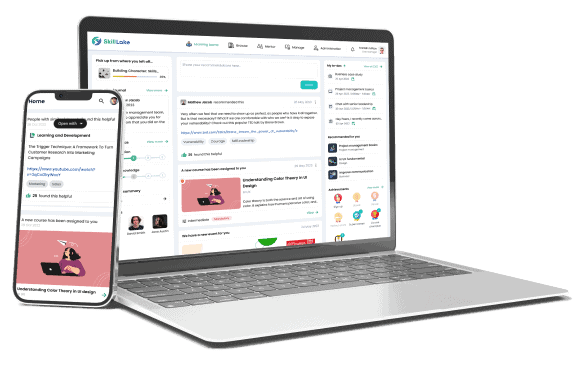
        Dashboard View of Skill Lake Platform
        Dashboard View of Skill Lake Platform

        6. Mentoring Programs

        Enhances knowledge transfer and skill development through mentoring programs aligned with evolving SOPs. This feature promotes a mentorship culture where experienced individuals guide others in understanding and applying SOPs effectively.

        7. Streamlined Course Management

        Ensures a seamless learning experience deeply integrated with SOPs. This feature streamlines the management of courses, making it easy for administrators to update and align content with the latest SOPs, maintaining consistency in training materials.

        8. User Management Features

        Provides tools for easy onboarding, tracking, engagement, and maintaining SOP compliance. This feature simplifies the administrative tasks associated with user management, ensuring that employees are effectively onboarded and consistently aligned with SOP requirements.

        9. Gamification Elements

        Engages learners with gamification elements aligned with SOP-centric content. This feature introduces game-like elements to the learning process, enhancing motivation and participation in SOP-related training activities.

        gamification 3
        Gamification on Skill Lake

        10. Dedicated Mobile App

        A dedicated mobile app for on-the-go learning keeps SOPs always accessible. This feature ensures that employees can access SOPs conveniently, promoting continuous learning and procedure adherence.

        Learning on the go mobile screen
        LMS mobile app for Skill Lake

        11. SOP-aligned Events

        Incorporates events that enhance learning experiences in line with SOPs. This feature integrates SOP-related events into the learning calendar, ensuring employees participate in activities reinforcing and applying SOP knowledge.

        HR SOP Format: Bonus Tip

        An HR SOP is a document that outlines the standardized processes and procedures followed by the HR department. It ensures consistency, efficiency, and compliance with legal regulations. Here’s a general HR SOP format:

        1. Title and Revision History

        Include the SOP title, department name, and revision history with dates and authors.

        2. Purpose and Scope

        Briefly explain the purpose of the SOP and the specific HR processes it covers.

        3. References

        List any relevant company policies, guidelines, or external regulations.

        4. Definitions (Optional)

        Define any specific terms used in the SOP for clarity.

        5. Procedures

        This is the core of the SOP, detailing the step-by-step instructions for each HR process.

        1. Use clear, concise language with bullet points or numbered lists for easy understanding.
        2. Include details like responsible parties, required forms, and timelines.
        3. Consider flowcharts or diagrams for complex processes.

        6. Resources

        List any resources needed to complete the process, like software, templates, or reference materials.

        7. Roles and Responsibilities

        Outline the roles and responsibilities of different individuals involved in the SOP.

        8. Recordkeeping

        Specify how records related to the SOP will be maintained, including storage, access, and retention guidelines.

        9. Approval

        Include the approval section with designated signatures and dates for relevant parties (e.g., HR manager, department head).

        10. Appendix (Optional)

        Include any additional information like relevant forms, templates, or decision-making matrices as needed.

        Conclusion

        Strategically integrating SOPs into the LMS framework is more than just technical collaboration; it is a transformative journey toward organizational excellence. It fosters a culture of continuous learning, guarantees compliance to standards, and aligns processes—all necessary components for prospering.

        Discover broader opportunities in Learning Management with Skill Lake. Request a Free Demo now!

        Sachin Krishna

        Sachin is a passionate advocate of e-learning with a profound knowledge of the field. He regularly writes compelling content that captivates readers and works to spread awareness of learning solutions.

        Other Reads from Skill Lake

        • Top LMS Training Platforms for 2026: 10 Best Solutions for Corporate Learning

          Top LMS Training Platforms for 2026: 10 Best Solutions for Corporate Learning

          Legacy corporate training frameworks are failing to solve contemporary skill gaps. To build an agile, future-ready workforce, organizations need a modern corporate training LMS that drives active capability mastery. This post evaluates the top LMS training platforms for 2026 currently delivering measurable operational ROI. Top 10 LMS Training Platforms for 2026 Note: Pricing and features

          Read More
        • How AI Simulation Training in LMS Prepares Teams for Real-World Scenarios

          How AI Simulation Training in LMS Prepares Teams for Real-World Scenarios

          Traditional corporate training methods often fall short when preparing employees for high-stakes, real-world challenges. Today’s business landscape demands a drastic shift from passive consumption to active mastery. This is why forward-thinking business leaders are adopting simulation-based learning in LMS to bridge the gap between theory and execution. By integrating advanced AI role play training, organizations

          Read More
        People Analytics

        People analytics are crucial for transforming how organizations supervise their employee pool in the age of information.It helps organizations unlock the true workforce potential and has become the cornerstone of Human Resources, driving data-based decision-making in organizations. 

        Talent management and workforce planning capabilities are examples of how people analytics has advanced from simple HR system reports on metrics like headcount and leave data.

        People Analytics emerges as a transformative tool, empowering managers and senior talent leaders to harness the power of data in their decision-making processes. The global market for people analytics reached a value of USD 2.58 billion in 2022 and is projected to expand significantly, reaching USD 7.67 billion by 2031, with a compound annual growth rate (CAGR) of 12.88% from 2023 to 2031.

         Effective people analytics is now imperative in the talent competition, enabling organizations to make strategic decisions based on robust data analysis. Companies with a strong HR people analytics culture report better performance compared to competitors. 

        What is People Analytics?

        HR analytics, also known as people analytics, is the application of data analysis to improve workforce management practices for corporate success. 

        Statistical analysis evaluates recruitment, performance management, and retention strategies. Johnson & Johnson’s story is a prime example of this.The organization questioned presumptions regarding staff retention with its data-driven approach. They found that recent college graduates stayed longer and performed similarly to experienced hires by looking at data from 47,000 employees. 

        This insight led to a strategic shift towards investing in their two-year leadership development program. As a result, they increased the hiring of new graduates by 20%, reducing turnover while maintaining performance levels.

        Why are people’s analytics important? 

        People analytics offers numerous advantages to organizations, driving competitive edge and fostering various benefits:

        •      Data-Driven Decision Making

        HR can make evidence-based decisions by analyzing internal data alongside expert judgment, thereby removing biases and inconsistencies. This enhances recruiting efficiency by up to 80% and decreases attrition rates by 50%.

        •      Strategic HR Interventions

        People analytics combines data and organizational strategy, demonstrating how HR strategies contribute to business objectives. This earns HR a leadership position, enhancing revenue and business growth.

        •      Enhanced Performance

        Data-driven insights optimize performance by highlighting collaboration, workload, and diversity issues. People analytics in HR has sometimes even doubled employee output, boosting overall performance.

        •      Cost Savings

        Analytics helps allocate budgets effectively, showcasing the value of each dollar spent. For instance, it invests in programs that improve employee performance while cutting back on less effective initiatives.

        •      Talent Management

        Businesses have access to vast amounts of data produced by different apps. Talent management experts can use this information to learn more about their workforce’s interactions, feelings, and organizational culture. They can understand team dynamics, spot trends in employee satisfaction, make well-informed decisions, and enhance company culture through analytics. This data-driven strategy makes proactive talent management possible, promoting a happy workforce and constructive change.

        •      Skills Gap Closure

        Analytics identifies current and future skills needed, facilitating targeted upskilling of existing employees and informed recruitment to fill any skill gaps.

        Skill Gap Analysis on Skill Lake
        Skill Gap Analysis on Skill Lake
        •      Turnover Reduction

        Data and metrics pinpoint reasons for turnover, enabling tailored strategies to retain talent, such as personalized development plans.

        •      Improved Recruitment

        Tracking recruitment metrics helps understand hiring strengths and weaknesses, improve processes, reduce turnover, and enhance the candidate experience.

        Key HR Metrics include:

        1. Employee Turnover Rate
        2. Early Turnover
        3. Absenteeism Rate
        4. Time to Hire
        5. Cost per Hire
        6. Revenue per Employee
        7. Employee Net Promoter Score (ENPS)
        8. Engagement Rating

        Application areas of people analytics

        Application areas of people analytics encompass a wide range of HR functions and organizational initiatives aimed at leveraging data-driven insights to enhance various aspects of workforce management and employee experience. Here’s how to implement HR people analytics for employee development and organizational growth. 

        Performance Measurement

        Key performance indicators (KPIs) are an example for People analytics allowing HR teams and managers to evaluate employee performance to provide effective feedback. The data-driven insights will enable the team to set performance benchmarks and use the analytics to plan training programs to enhance employee performance and well-being. 

        Promotion and Salary Decisions

        Organizations can employ data-driven approaches to ensure fairness in promotion and salary decisions by analyzing performance metrics, tenure, skills, and market benchmarks. They can identify and mitigate biases and nepotism through objective analysis of employee contributions and potential.

        Attrition Understanding and Retention

        People analytics allow organizations to predict and understand employee attrition factors through data analysis, such as analyzing trends related to team dynamics, job satisfaction, career development opportunities, and managerial effectiveness. The analytics help organizations to develop targeted retention strategies based on insights gained from predictive analytics to address identified attrition drivers.

        Examine Employee Examination

        Organizations can use the tools and internal HR surveys to understand employee engagement, performance, and feelings. This will help them use appropriate techniques to overcome any challenges. 

        Employee Development Measurement

        1. The HR team can shift focus from measuring training satisfaction to tracking comprehension and progress through data-driven analytics.
        2. The L&D team can customize training content and delivery methods based on predictive analytics insights. Use this data to address individual learning needs and maximize learning outcomes.

        How to implement people analytics?

        Getting started with People Analytics involves several key steps to ensure success. 

        Here’s a checklist to help you begin:

        •       Assess Organizational Readiness

        Evaluate if your organization is poised for People Analytics by examining its data infrastructure, leadership commitment, and HR capabilities.

        •      Craft a People Analytics Strategy

        Develop a clear roadmap outlining your objectives, key metrics, and desired outcomes aligned with organizational goals.

        •      Establish a People Analytics Team

        You need to set up a multidisciplinary team which comprises HR professionals, analytics and team managers. This team is crucial in conducting people analytics in HR research, evolution, and optimization strategies. 

        •      Select Appropriate Software

        Choose analytics tools and platforms tailored to your organization’s size, budget, and specific requirements, ensuring they integrate seamlessly with existing systems.

        •      Explore Data and Identify Key Challenges

        People analytics gives you access to data to understand key challenges and make necessary changes to enhance talent retention, diversity, and performance gaps. 

        •      Implement Training Programs

        After analyzing employee performance, feedback, and competency, the team can use it to understand skill gaps and implement training. This analytics is also helpful in ensuring that the training meets the organizational goals. Based on people analytics, it is easier to implement personalized learning paths based on employee performance, career goals, and job roles. This increases training efficacy and employee engagement. 

        •      Monitor Progress and Evaluate the Impact

        Make necessary adjustments to your strategies to drive positive organizational outcomes. This allows you to continuously track and measure the effectiveness of your People Analytics in HR initiatives against predefined metrics.

        Conclusion

        Organizations can look into work behaviors and make more informed decisions for organizational development with the help of people analytics. Identifying pertinent data, keeping up with emerging trends, and setting precise goals are all important factors when implementing people analytics. 

        Aarathy Jayakrishnan

        Aarathy is an e-learning professional and enthusiast with a keen understanding of learning and development concepts. She writes insightful content, unraveling the possibilities that e-learning holds, and strives to make education open for all.

        Other Reads from Skill Lake

        • Top LMS Training Platforms for 2026: 10 Best Solutions for Corporate Learning

          Top LMS Training Platforms for 2026: 10 Best Solutions for Corporate Learning

          Legacy corporate training frameworks are failing to solve contemporary skill gaps. To build an agile, future-ready workforce, organizations need a modern corporate training LMS that drives active capability mastery. This post evaluates the top LMS training platforms for 2026 currently delivering measurable operational ROI. Top 10 LMS Training Platforms for 2026 Note: Pricing and features

          Read More
        • How AI Simulation Training in LMS Prepares Teams for Real-World Scenarios

          How AI Simulation Training in LMS Prepares Teams for Real-World Scenarios

          Traditional corporate training methods often fall short when preparing employees for high-stakes, real-world challenges. Today’s business landscape demands a drastic shift from passive consumption to active mastery. This is why forward-thinking business leaders are adopting simulation-based learning in LMS to bridge the gap between theory and execution. By integrating advanced AI role play training, organizations

          Read More
        internal mobility

        Traditionally, employees were expected to remain in their initial roles despite outgrowing them or showing interest in other business areas. However, HR leaders have had to reassess their strategies due to increasing talent shortages and changing consumer expectations. They now recognize that strategies on top of external hiring are needed to bridge skill gaps effectively. As a response, leaders are now focusing more on internal development and mobility within their workforce. They are implementing learning and development pathways to empower existing employees to acquire the skills needed for the evolving demands of the future workplace. This helps companies adapt to the tight talent market and create a more dynamic and resilient workforce. According to LinkedIn’s 2023 Future of Recruiting Report, 75% of recruiting pros say internal recruiting will be an essential factor shaping talent acquisition over the next five years. And a recent survey of nearly 3,000 C-suite executives showed that CEOs consider internal mobility a top priority. 

        What is internal mobility? 

        Internal mobility or employee mobility refers to the deliberate movement of employees within an organization, horizontally and vertically. Effective internal mobility strategies are designed to inspire individuals to embrace fresh growth prospects that harmonize with their long-term career aspirations as well as the strategic objectives of the business.

        At its core, internal mobility entails the establishment of a framework within organizations that facilitates greater agility in talent deployment, transcends traditional departmental boundaries, and dismantles any inclination towards hoarding talent.

        Why is internal mobility important?

        It is a win-win for organization and employees.

        Utilizing internal mobility gives organizations the talent they need without paying the proof. Hiring employees familiar with the business streamlines onboarding processes reduces hiring costs, and ensures optimal resource utilization.

        Internal mobility fosters individual growth and satisfaction and cultivates a dynamic and inspiring workplace culture. Employees are empowered to pursue their career aspirations within the company by providing them opportunities for skill development and role transitions, leading to increased engagement, morale, and retention rates. Moreover, internal mobility promotes knowledge sharing across teams, enhancing collaboration and innovation throughout the organization. When employees witness their peers advancing and succeeding in various roles, it instills a sense of possibility and motivation, creating a ripple effect of ambition and achievement across the workforce. As a result, prioritizing the talent mobility framework benefits individual career growth and contributes to establishing a vibrant and empowering organizational culture where continuous growth and development are celebrated.

        The Role of L&D Teams in Getting Internal Mobility Right

        L&D (Learning and Development) teams play a pivotal role in facilitating talent mobility in the workforce.

        Collaboration for Strategic Alignment

        L&D leaders must partner to identify business goals and skills gaps. By working closely with senior leadership and HR functions like Talent Acquisition, they gain insights into the strategic roadmap and workforce-planning strategies. This collaboration ensures that skill-building efforts align with current and future organizational needs.

        Connecting Career Aspirations with Business Goals

        Understanding employees’ career aspirations is crucial for adequate internal mobility. L&D teams should spend time understanding individual and organizational needs to create learning paths aligning personal growth with business objectives. By illustrating how acquiring new skills can contribute to personal and organizational development, L&D fosters greater engagement among employees.

        Emphasizing Manager Support

        Manager support is integral to the success of internal mobility efforts. L&D teams must advocate for manager involvement in skill-building and career development discussions. By framing internal mobility as a moment of growth rather than loss, managers are encouraged to support employees seeking new opportunities within the organization. Highlighting the benefits of internal mobility, such as access to proven talent and improved cross-team collaboration, reinforces the value proposition for managers.

        Measuring and Tracking Impact

        As internal mobility initiatives evolve, L&D teams play a crucial role in measuring and tracking their impact on the business. This involves collaborating with People Analytics partners to understand how learning and skill-building contribute to talent mobility, engagement, and retention. By quantifying the number of business-critical roles filled by internal talent and accelerating the leadership-succession pipeline, L&D demonstrates its contribution to organizational success.

        How do you rethink your internal mobility strategy?

        Identify Existing Skill Sets

        Identifying and utilizing employees’ existing skill sets for internal mobility is a valuable strategy for organizational growth and employee development. Conduct a thorough assessment of the skills and competencies of employees. Once the employee skill sets are identified, map these skills to roles and departments leveraging these/similar skill sets within the organization. Look for matches between employees’ current skills and the requirements of other positions or projects. A Performance Management Ready Learning Management System (LMS) will help organizations to conduct training programs, and evaluate their effectiveness. This will help organization’s to boost productivity and help employees excel in their roles.

        Screenshot 2023 11 15 112006
        Competency Mapping on Skill Lake

        Launch Awareness Campaign

        Communicate the importance of internal mobility and its benefits to employees and the organization. Use email newsletters, intranet announcements, and team meetings to spread the message effectively.

        Training and Resources

        Develop a comprehensive training program tailored to address skill gaps identified in step one. This could include workshops, online courses, or access to external resources. Additionally, create a repository of self-directed learning resources and tools employees can utilize.

        Career Development Conversations

        Encourage regular one-on-one discussions between employees and managers to explore career aspirations, identify developmental opportunities, and align individual goals with organizational needs. Provide managers with training on how to facilitate these conversations effectively.

        Skill Development Opportunities

        Offer various skill development opportunities such as cross-functional projects, job rotations, and mentorship programs. Ensure these opportunities are accessible to all employees and actively promote participation.

        Feedback Mechanisms

        Implement a feedback mechanism where employees can provide input on their experiences with internal mobility initiatives. Use this feedback to improve and refine the program continuously.

        Recognition and Rewards

        Establish a system to recognize and reward employees actively participating in internal mobility programs, demonstrating skill development, and contributing to the organization’s success.

        Evaluation and Adjustment

        Regularly evaluate the effectiveness of the internal mobility program by analyzing metrics such as participation rates, skill development progress, and employee satisfaction. Use this data to make adjustments and improvements as needed.

        Ongoing Communication

        Maintain open and transparent communication about the progress of the internal talent mobility program, highlighting success stories and lessons learned. Encourage ongoing dialogue between employees, managers, and HR to ensure continuous improvement and alignment with organizational goals.

        Conclusion

        Internal mobility is vital to talent management, extending beyond mere employee reassignment. It requires continual attention and investment. Organizations can utilize internal mobility to enhance employee engagement, foster innovation, and achieve business objectives through effective measurement strategies and monitoring emerging trends. When executed effectively, internal mobility is a mutually beneficial tool that drives organizational success.

        Aarathy Jayakrishnan

        Aarathy is an e-learning professional and enthusiast with a keen understanding of learning and development concepts. She writes insightful content, unraveling the possibilities that e-learning holds, and strives to make education open for all.

        Other Reads from Skill Lake

        • Top LMS Training Platforms for 2026: 10 Best Solutions for Corporate Learning

          Top LMS Training Platforms for 2026: 10 Best Solutions for Corporate Learning

          Legacy corporate training frameworks are failing to solve contemporary skill gaps. To build an agile, future-ready workforce, organizations need a modern corporate training LMS that drives active capability mastery. This post evaluates the top LMS training platforms for 2026 currently delivering measurable operational ROI. Top 10 LMS Training Platforms for 2026 Note: Pricing and features

          Read More
        • How AI Simulation Training in LMS Prepares Teams for Real-World Scenarios

          How AI Simulation Training in LMS Prepares Teams for Real-World Scenarios

          Traditional corporate training methods often fall short when preparing employees for high-stakes, real-world challenges. Today’s business landscape demands a drastic shift from passive consumption to active mastery. This is why forward-thinking business leaders are adopting simulation-based learning in LMS to bridge the gap between theory and execution. By integrating advanced AI role play training, organizations

          Read More
        Employee Training Tracking

        Employee training is vital for organizational success. According to statistics, 68% of employees acknowledge its importance. Training results in a notable increase of 24% in profit margins. The lack of proper training results in 40% of employees leaving their jobs within a year, emphasizing the critical role of training in talent retention. These figures underscore the importance and the need for a robust tracking system and a data-driven approach to maximize training benefits. 

        This blog will delve into the strategies that can significantly enhance the efficiency and impact of training programs. However, before we explore the strategies, let’s address a crucial question regarding employee training tracking.

        Why is Employee Training Tracking Necessary?

        Systematically tracking employee training offers numerous benefits for optimizing the learning experience, refining training methodologies, and substantiating the return on investment.

        Key reasons to track training progress include the following:

        Identification of Knowledge Gaps

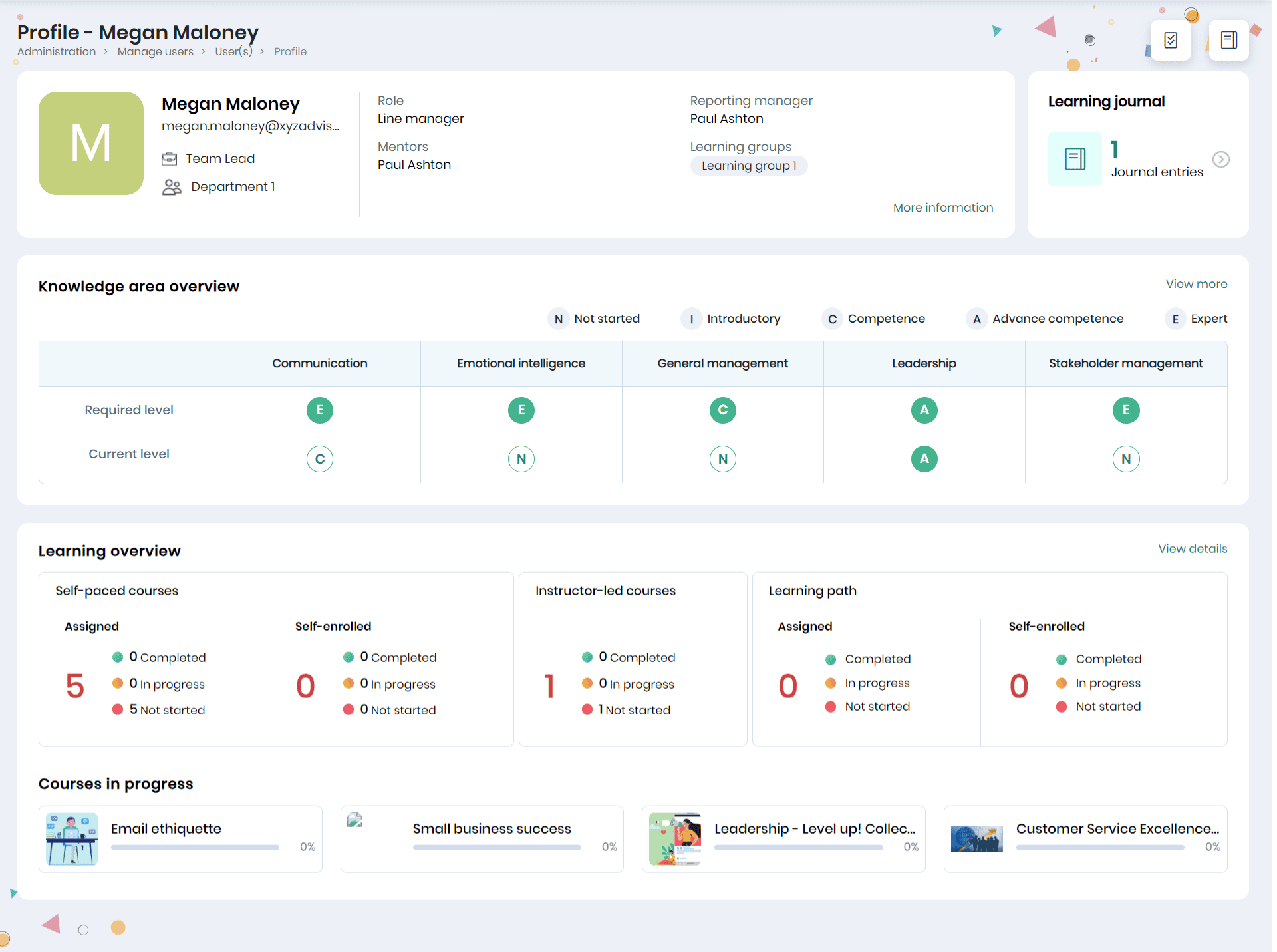
        Assessments serve as effective measures to identify knowledge gaps and play an essential role in creating targeted, efficient, and impactful training programs. Addressing knowledge gaps enables organizations to contribute to the ongoing development and success of individuals and the organization.

        Knowledge Area on Skill Lake
        Knowledge Area on Skill Lake

        Improved Training Delivery

        Training tracking enhances L&D program delivery by providing insights into course effectiveness. With training metrics, adjustments can be made to improve the learning experience, reducing dropout rates and increasing course completion.

        Employee Development & Retention

        Efficiently managing employee training is crucial for evaluating the effectiveness of learning programs and unlocking the full potential of each team member. Employing comprehensive tracking systems allows organizations to identify areas for improvement, ensuring that employees gain the necessary skills and knowledge to excel in their roles. This proactive approach boosts job satisfaction and cultivates a more dynamic and dedicated workforce.

        Securing Project Approval

        Securing approval for training projects, whether new initiatives or upgrades, necessitates tangible evidence of success. Tracking becomes crucial in showcasing the increased employee performance and productivity resulting from a training program. This data is compelling proof of training effectiveness, facilitating approval for future initiatives.

        What Are The Right Practices To Track Employee Training?

        Implementing a training tracker ensures employees acquire the skills and knowledge required to perform their roles effectively. By consistently monitoring and updating training records, employers can gauge the overall effectiveness of their training initiatives, address specific skill gaps, and ultimately contribute to their workforce’s professional development and success. Now, let us discuss that in detail:

        Use Employee Tracking Software

        Opting for specialized employee tracking software is crucial, especially for compliance-driven or large-scale training initiatives. These solutions effectively monitor employee engagement, track course completion rates, and assess the achievement of Learning and Development (L&D) goals. In addition to dedicated tracking software, a Learning Management System (LMS) is an optimal choice for comprehensive training oversight. LMS platforms enable the creation and distribution of online courses and assessments while offering real-time tracking of training progress and completion. Insightful reports and analytics further enhance the ability to evaluate past training records and make informed decisions for ongoing programs.

        Perform Regular Employee Assessments

        Like periodic student assessments post-lesson, ongoing employee assessments during and after training are essential. These evaluations offer insights into performance, engagement levels, challenging topics, and areas for improvement. Crucially, they help determine if employees acquire the necessary skills within the designated time frame. Leading Learning Management System (LMS) tools provide professionally crafted online quizzes, readily available in the cloud, facilitating easy assessment anytime, anywhere, and on any device.

        Conduct Workplace Observations

        After a workforce training program, employers eagerly anticipate noticeable improvements in employee job performance. By closely observing the workplace, employers can determine whether employees previously unfamiliar with standard operating procedures have now acquired the knowledge and skills necessary to fulfill their responsibilities post-training.

        Consider Employee Suggestions and Feedback

        Collecting post-training feedback from employees is crucial for assessing the success and value of your learning and development programs. This feedback serves as an indicator of the effectiveness of the training, helping to evaluate whether the investment in time, costs, and human resources was worthwhile. The insights gained from these surveys will inform your future decisions and guide adjustments to your current program. Using concise and targeted survey questions embedded within the training course can efficiently gauge the overall impact of the session.

        Receive Input From Supervisors

        Supervisors’ feedback, similar to that of employees, enhances the monitoring of employee training progress. Given the substantial time spent with employees, supervisors can readily observe adherence to training steps, procedures, and methods. They are leveraging supervisor input to aid in gauging the effectiveness of training programs and pinpointing areas where certain employees may require additional coverage.

        Learning Journal 1
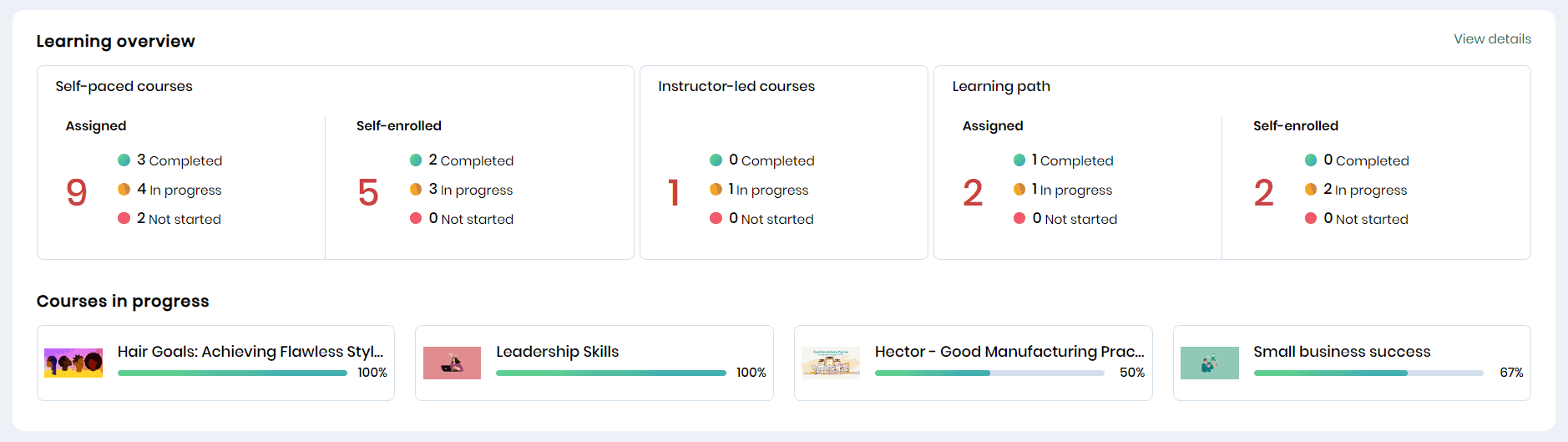
        Employee Feedback on Skill Lake

        How Does An LMS Make Tracking Employee Training Efficient?

        The Learning Management System (LMS) is a centralized hub for all training data, encompassing training materials, assessments, and progress. By eliminating scattered records, the LMS automates tracking processes and seamlessly updates records as employees complete courses, providing real-time insights into individual progress. Also, robust reporting and analytics features of LMS empower data-driven decision-making, allowing easy assessment of program effectiveness and ensuring regulatory compliance.

        Conclusion

        For a comprehensive and user-friendly solution to meet all your training needs, it is important to consider implementing a Learning Management System (LMS) like Skill Lake. The platform consolidates training data, providing real-time insights into individual progress, and its robust reporting and analytics features enable data-driven decisions, ensuring program effectiveness and compliance. The platform also offers customization, seamless integration with HR systems, and scalability for convenience, accessibility, and efficiency in tracking employee training. Explore Skill Lake today. Request a Free Demo now!

        Ashmitha Chatterjee

        Ashmitha is a learning and development enthusiast who shares her insights on e-learning. She loves to create engaging and informative content and is dedicated to helping people learn and grow through her deep expertise in the field.

        Other Reads from Skill Lake

        • Top LMS Training Platforms for 2026: 10 Best Solutions for Corporate Learning

          Top LMS Training Platforms for 2026: 10 Best Solutions for Corporate Learning

          Legacy corporate training frameworks are failing to solve contemporary skill gaps. To build an agile, future-ready workforce, organizations need a modern corporate training LMS that drives active capability mastery. This post evaluates the top LMS training platforms for 2026 currently delivering measurable operational ROI. Top 10 LMS Training Platforms for 2026 Note: Pricing and features

          Read More
        • How AI Simulation Training in LMS Prepares Teams for Real-World Scenarios

          How AI Simulation Training in LMS Prepares Teams for Real-World Scenarios

          Traditional corporate training methods often fall short when preparing employees for high-stakes, real-world challenges. Today’s business landscape demands a drastic shift from passive consumption to active mastery. This is why forward-thinking business leaders are adopting simulation-based learning in LMS to bridge the gap between theory and execution. By integrating advanced AI role play training, organizations

          Read More
        Change Management

        “To improve is to change; to be perfect is to change often.”

        Winston Churchill.

        Embracing change is crucial for organizations to succeed. When embracing change, effective change management becomes important. With a remarkable 73% of organizations expecting a surge in demand for more efficient change management practices from 2020 to 2024, as highlighted by StrategyEx, the need for adaptability is more evident than ever. Forbes further emphasizes that companies mastering effective change management practices are 3.5 times more likely to surpass their industry peers. This highlights the pivotal role of skillful change management. 

        Why Is Change Management Crucial For Businesses?

        Change management is crucial for businesses to navigate complexities, minimize disruptions, engage employees, and achieve strategic objectives in an ever-evolving environment.

        It is the deliberate process of overseeing and facilitating organizational changes at various levels. It involves decision-making by management teams to define the approach, develop strategies, and execute plans to implement change effectively. 

        What Are the Top Expected Organizational Changes?

        Organizations experience various types of change, and how they manage these changes can vary based on the nature and scope of the transformation. Here are different types of change management:

        1. Technology and Digital Transformation 

        Technology is pivotal in changing organizational strategies and operations in the modern business landscape. This involves adopting new technologies, processes, and business models so organizations can stay competitive and meet evolving customer expectations.

        2. Regulatory Changes and Compliance 

        Regulatory changes and compliance refer to adjustments organizations need to make in response to new laws, regulations, or industry standards. This can impact various aspects of the business, including governance, data protection, and industry-specific guidelines.

        3. Environmental Sustainability and Climate Change 

        The focus on environmental sustainability and climate change reflects a growing awareness of the ecological impact of business operations. Organizations are increasingly expected to adopt sustainable practices, reduce their carbon footprint, and contribute to broader environmental goals.

        4. Talent Retention and Turnover 

        Talent retention and turnover highlight organizations’ challenges in attracting, retaining, and developing a skilled workforce. Employee engagement, career development opportunities, and work-life balance contribute to talent retention and can significantly influence organizational performance.

        5. Cultural and Organizational Change 

        Cultural and organizational change refers to the efforts that reshape a company’s values, beliefs, and behaviors. This can involve fostering innovation, improving collaboration, or adapting to a new leadership style. 


        5 Tips To Prepare Your Employees For Change Management

        a. Prepare the Organization for Change

        Preparing an organization for change involves a comprehensive assessment of the current state, identifying areas for improvement, and evaluating organizational and employee readiness. Key components include developing a transparent communication strategy, ensuring leaders are aligned and equipped to manage change, and involving stakeholders at all levels for input and feedback. 

        b. Craft a Vision and Plan for Change

        A vision and plan for change is crucial for fostering a positive and adaptive organizational culture. This involves defining an inspiring vision aligned with values, setting Specific, Measurable, Achievable, Relevant, and Time-Bound(SMART) goals, and developing a comprehensive change management plan. A realistic timeline, effective communication, and adaptive strategies ensure successful implementation, fostering a culture that values continuous improvement and can navigate unforeseen challenges with flexibility.

        c. Implementing the Change

        Implementing changes in change management requires a thoughtful and strategic approach.

        1. Adopt an Agile Approach

        Adopting an Agile approach is crucial for effectively navigating change. Encouraging collaboration within cross-functional teams promotes collective ownership, and regular reassessment based on feedback ensures alignment with organizational needs. This cultivates a culture of continuous improvement, empowering teams to navigate change with agility and resilience.

        2. Use Tools and Software 

        Effective communication is vital during organizational change. Employ organizational communication tools to keep teams informed, coordinate tasks, share updates, and engage in discussions. Effective communication aligns teams, manages expectations, addresses concerns, and fosters collaboration, which is essential for successfully navigating changes.

        3. Host Live Meet-And-Greets

        Live meet-and-greets are vital in change management. They build trust and rapport, clarify expectations, provide feedback forums, foster inclusion, and facilitate effective communication. These gatherings create a supportive environment where employees feel empowered to embrace change, ensuring smooth transitions and organizational success.

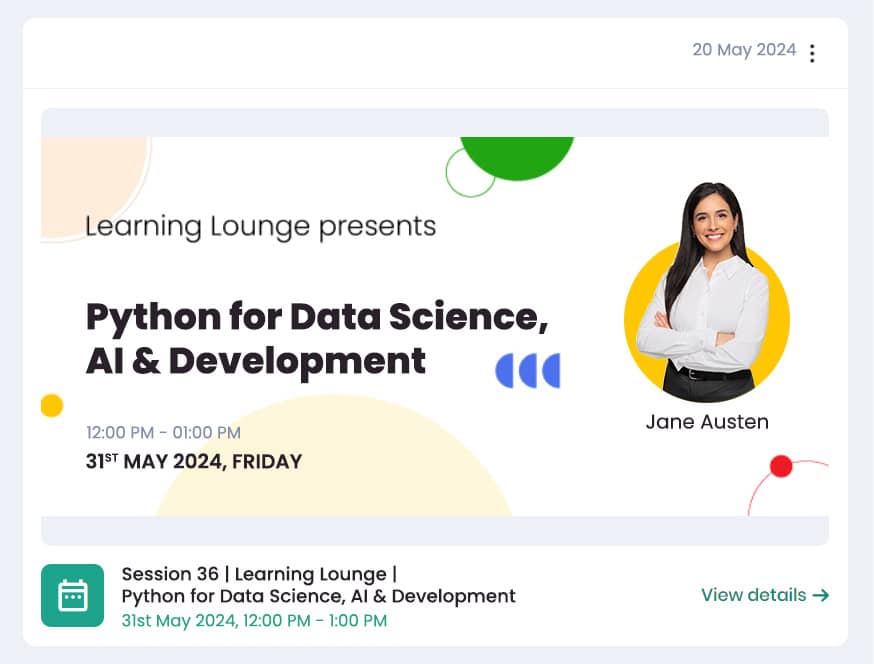
        1 1
        Live Webinar Session on Skill Lake

        4. Launch an Online Support Library

        Introduce an Online Support Library designed to assist team members in navigating change management training with ease. This comprehensive hub should offer just-in-time (JIT) resources, including podcasts and video demos, facilitating a better understanding of new tasks. Additionally, it features concise profiles of new managers and supervisors alongside policy refreshers to ensure compliance. 

        5. Train Employees

        Training is important for change management. It equips employees with the necessary skills and knowledge to navigate transitions seamlessly. It enhances their adaptability and fosters a collective understanding of the organizational changes, aligning everyone towards common goals. Organizations prioritizing training empower their workforce to ensure a smoother transition and promote long-term success.

        6. Give Regular Feedback

        Regular feedback is like the guiding force steering organizations during changes. It fine-tunes individual performance, keeping goals aligned with the ever-shifting objectives. Positive feedback motivates, boosts morale, and builds resilience in uncertain times. This continuous learning, driven by feedback, forms the backbone of organizational adaptability. It ensures that training adapts to change and helps individuals become more self-aware, communicate openly, and retain crucial information.

        d. Embed Changes Within Company Culture and Practices

        Embedding transformative changes within company culture and practices is complex but essential. A well-executed change management approach, focusing on leadership alignment, communication, employee involvement, and ongoing evaluation, can pave the way for a successful cultural transformation. By integrating these strategies into the organization’s DNA, companies can change more effectively and thrive in an ever-evolving business landscape.

        e. Review Progress and Analyze Results

        Evaluating change management involves a thorough analysis post-completion. This analysis helps leaders identify improvements, and learn valuable lessons for informed decision-making in future endeavors. The analysis acts as a strategic tool, fostering a culture of adaptability and innovation within the organization.

        Conclusion

        Change management emerges as a strategic necessity for businesses to survive and excel. By embracing change as an opportunity for growth and innovation, organizations can navigate the complexities of the modern business landscape with resilience. 

        Aarathy Jayakrishnan

        Aarathy is an e-learning professional and enthusiast with a keen understanding of learning and development concepts. She writes insightful content, unraveling the possibilities that e-learning holds, and strives to make education open for all.

        Other Reads from Skill Lake

        • Top LMS Training Platforms for 2026: 10 Best Solutions for Corporate Learning

          Top LMS Training Platforms for 2026: 10 Best Solutions for Corporate Learning

          Legacy corporate training frameworks are failing to solve contemporary skill gaps. To build an agile, future-ready workforce, organizations need a modern corporate training LMS that drives active capability mastery. This post evaluates the top LMS training platforms for 2026 currently delivering measurable operational ROI. Top 10 LMS Training Platforms for 2026 Note: Pricing and features

          Read More
        • How AI Simulation Training in LMS Prepares Teams for Real-World Scenarios

          How AI Simulation Training in LMS Prepares Teams for Real-World Scenarios

          Traditional corporate training methods often fall short when preparing employees for high-stakes, real-world challenges. Today’s business landscape demands a drastic shift from passive consumption to active mastery. This is why forward-thinking business leaders are adopting simulation-based learning in LMS to bridge the gap between theory and execution. By integrating advanced AI role play training, organizations

          Read More
        AI-Powered LXP

        The persistent challenge for organizations lies in addressing the ever-widening skill gap. Recent surveys indicate that 87% of HR executives have acknowledged or anticipated primary skills gaps within their workforce. This statistic has prompted a paradigm shift in how businesses approach talent development and upskilling. AI-powered LXP is the dynamic solution reshaping how organizations bridge these skill gaps. Surveys unveil that 89% of business leaders recognize the need for a skill-based approach to redefine how work is conceptualized, talent is deployed, and careers are managed. 

        This revolutionary transition nurtures creativity and efficiency, establishing the groundwork for a more flexible and responsive workforce. According to insightful reports, businesses leveraging AI are projected to witness a remarkable 40% increase in profitability by 2035. This underscores AI-powered Learning Platforms‘ role in enabling organizations to adapt seamlessly to the demands of the digital, remote, and mobile work landscape. 

        In this blog post, we will explore the transformative impact of AI and Machine Learning on Learning Experience Platforms (LXPs) and their role in shaping the future of workforce upskilling.

        How Is AI And Machine Learning Transforming LXP?

        AI and Machine Learning are revolutionizing Learning Experience Platforms (LXPs) in several ways, particularly in the realm of personalized learning:

        1. Tailored Learning Paths

        AI Learning Platforms are reshaping traditional one-size-fits-all learning paths by crafting personalized journeys for individual users. By analyzing user data and incorporating preferences, past achievements, and learning goals, artificial intelligence generates personalized recommendations for courses and materials that closely align with each individual’s specific needs and objectives. This customized approach enhances user engagement and ensures relevance, leading to more effective educational results or achievements. Moreover, integrating AI in LXPs goes beyond personalization, addressing the importance of adaptive learning for optimal progression. By identifying and adapting to the distinctive learning needs of each individual, AI in LXPs dynamically adjusts content difficulty, pacing, and format based on individual progress and comprehension. This personalized and adaptive methodology challenges learners at an appropriate level, fostering better understanding and retention of concepts. 

        Learning path on Skill Lake
        Learning path on Skill Lake

        2. Personalized Assessments

        AI-driven LXPs surpass traditional assessments with interactive quizzes, simulations, and natural language processing for easy evaluations. Learners receive detailed feedback, enhancing their understanding of strengths and areas for improvement. Well-crafted questions will guide learning, pinpointing gaps for targeted improvement. It also offers personalized feedback, providing in-depth insights into learner progress, strengths, and weaknesses. This information aids in identifying areas needing attention and tracking overall growth. 

        Screenshot 2023 11 15 112006
        Knowledge Area on Skill Lake

        3. Intelligent Recommendations

        In the face of an overwhelming online information landscape, AI-powered learning platforms tackle the challenge by intelligently recommending content. Through analysis of user behavior, preferences, and performance, these platforms suggest the most relevant and valuable resources from a vast library. This saves time and ensures learners access to accurate and up-to-date information, elevating the learning experience. Based on user data and insights from other learners, predictive analysis and recommendations further guide individuals to explore areas beyond their preferences.

        4. Adaptive Content Delivery

        AI-driven LXPs dynamically tailor content delivery to each learner’s needs. This adaptive feature utilizes advanced algorithms and data analytics to analyze user behavior, learning patterns, and performance metrics. The platform fosters engagement by recommending relevant content, adjusting difficulty levels, suggesting customized learning paths, accelerating learning outcomes, and maximizing effectiveness. This approach enhances knowledge retention and overall learner satisfaction.

        5. Collaborative  Learning

        AI-driven LXPs enable collaborative learning via features such as discussion forums and chatbots, promoting meaningful engagement among learners. This social learning dynamic encourages knowledge sharing, diverse perspectives, and collaborative problem-solving. AI-powered LXPs can integrate collaborative projects, fostering teamwork, critical thinking, and real-world problem-solving. These projects also offer opportunities for peer feedback and constructive learning interactions, enhancing the collective learning experience.

        6. Data-driven Insights

        AI-driven LXPs collect detailed data on learner behaviors, performance, and engagement, providing comprehensive analytics dashboards for individual and group progress insights. These data-driven analyses empower learners to recognize their patterns, pinpoint areas for improvement, and make informed decisions about their learning journey.

        AI algorithms leverage learner data to offer personalized recommendations, suggesting relevant courses, resources, and potential career paths based on preferences and aspirations. These intelligent suggestions keep learners on the right track toward achieving their goals.

        7. Continuous Learning and Adaptability

        AI-powered LXPs undergo continuous improvement with regular updates and enhancements based on user feedback and performance data. This ensures learners access the latest content, methodologies, and features, elevating their learning experience.

        At the forefront of innovation, AI-powered LXPs integrate emerging technologies like virtual reality (VR), augmented reality (AR), and gamification for enhanced learner engagement and immersion. These technologies offer interactive and enjoyable learning experiences, contributing to greater effectiveness.

        8. Multiple Content Formats

        Incorporating diverse format types in a Learning Experience Platform (LXP) is pivotal for delivering an immersive and adaptable learning experience. By offering a range of formats such as text, videos, interactive modules, quizzes, and multimedia presentations, an LXP addresses varied learning preferences and heightens learner engagement. This approach allows learners to absorb information through visual, auditory, and interactive channels, catering to individual learning styles.

        scorm 3
        Inbuilt Content Authoring Tool

        Furthermore, the utilization of different formats is beneficial not only for learners but also for search engine recognition. Search engines value diverse content formats as they enhance user experience and contribute to improved search rankings. Including multiple format types in an LXP nurtures a comprehensive and well-rounded learning environment and enhances organic visibility by attracting search engine traffic.

        Conclusion

        AI-driven Learning Experience Platforms are transforming training by providing personalized learning, dynamic content distribution, intelligent reviews, social learning, data-driven insights, smart suggestions, and flexibility.

        Learn how AI-enabled Skill Lake LMS helps drive better results in training management. Request a Free Demo now!

        Sachin Krishna

        Sachin is a passionate advocate of e-learning with a profound knowledge of the field. He regularly writes compelling content that captivates readers and works to spread awareness of learning solutions.

        Other Reads from Skill Lake

        • Top LMS Training Platforms for 2026: 10 Best Solutions for Corporate Learning

          Top LMS Training Platforms for 2026: 10 Best Solutions for Corporate Learning

          Legacy corporate training frameworks are failing to solve contemporary skill gaps. To build an agile, future-ready workforce, organizations need a modern corporate training LMS that drives active capability mastery. This post evaluates the top LMS training platforms for 2026 currently delivering measurable operational ROI. Top 10 LMS Training Platforms for 2026 Note: Pricing and features

          Read More
        • How AI Simulation Training in LMS Prepares Teams for Real-World Scenarios

          How AI Simulation Training in LMS Prepares Teams for Real-World Scenarios

          Traditional corporate training methods often fall short when preparing employees for high-stakes, real-world challenges. Today’s business landscape demands a drastic shift from passive consumption to active mastery. This is why forward-thinking business leaders are adopting simulation-based learning in LMS to bridge the gap between theory and execution. By integrating advanced AI role play training, organizations

          Read More
        Learning Paths - Skill Lake

        The World Economic Forum estimates that, by 2025, 50% of all employees will need reskilling due to adopting new technology. Effectively addressing employee skill gaps is paramount for fostering sustained growth and strengthening workforce competitiveness. Recent insights from Lorman indicate that 80% of U.S. workers believe regular and frequent training surpasses the significance of formal workplace training. The statistics underscore the importance of acknowledging the pivotal role of Learning Management Systems (LMS) in upskilling and empowering employees for continuous learning paths. However, a concerning 33% express dissatisfaction with their current company-provided training, signaling a need for improvements in meeting employee expectations.

        One prominent challenge in training is the need for a structured learning journey within traditional LMS. The adoption of Learning Paths emerges as a transformative solution as it offers a meticulously designed roadmap, guiding learners through a coherent and progressive sequence of courses or modules. This not only ensures a more organized and streamlined learning experience but also addresses the issue of employee disengagement, often stemming from difficulties in identifying their learning objectives.

        In this blog, we will delve into the intricacies of Learning pathways within LMS, elucidating their role in shaping a comprehensive and impactful approach to employee skill development.


        What is a Learning Path?

        A Learning Path represents a curated series of courses seamlessly woven together, enabling learners to systematically advance in mastering a specific subject or program. This feature facilitates the simultaneous enrollment of multiple users in various courses, providing a time-saving advantage. 

        There are distinct learning paths designed for employees and separate learning paths tailored for partners and customers.

        A. Learning Paths for Employees

        Pathway to learning for employees are curated sequences of training content designed to guide them toward specific skill sets, onboarding, or career goals. These paths can be highly customized to individual needs and career aspirations, ensuring each employee receives the most relevant and impactful learning experience.

        B. Learning Paths for Partners and Customers

        Learning paths for partners and customers can be a valuable tool to ensure they have the knowledge and skills to leverage your products or services effectively. These paths can help you build stronger relationships, increase customer satisfaction, and drive revenue growth.


        Different Types of Learning Paths

        Learning Paths are three distinct types—sequenced, learners’ choice, and level. They have been meticulously crafted to cater to specific training objectives.

        a) Sequenced Learning Paths

         This model entails a carefully structured progression of courses. Each course is a foundational step, preparing learners for the subsequent ones. The emphasis is on creating a well-organized and progressive learning experience.

        b) Learners’ Choice Learning Paths

        This approach offers a recommended set of courses, yet a rigid sequence does not bind employees. This framework grants individuals the autonomy to select courses based on their proficiency or immediate learning needs, promoting a sense of personalized learning.

        c) Level Learning Paths

        Demonstrating flexibility, this approach empowers staff to engage with various courses or sessions without a predetermined sequence. It embraces adaptability and caters to diverse learning preferences.


        Advantages of Learning Paths

        Save Time

        Learning paths automatically streamline onboarding, ensuring quick productivity for new team members. It minimizes manual path assignment and tracking efforts, enabling administrators to focus on strategic tasks and enhancing operational efficiency.

         Enhancing Efficiency and Knowledge Retention

        Learning paths provide a clear and organized structure for training programs, allowing learners to progress through training material logically and efficiently, resulting in a better retention rate. 

        Increased Engagement

        Goal-oriented learning paths provide a sense of purpose and progress, significantly improving learner engagement and motivation compared to traditional training methods.


        Learning Paths and eLearning

        Learning paths play a crucial role in enhancing the effectiveness of eLearning programs. By carefully curating and sequencing content, learning paths guide learners on a structured journey toward achieving specific learning goals. This integration with Learning Management Systems (LMS) further empowers eLearning by providing a centralized platform for managing and delivering learning content.

        Learning paths
        Learning Path on Skill Lake


        Integration with Learning Management Systems (LMS)

        Learning Management Systems (LMS) are software applications that manage, deliver, and track online learning content. Learning paths can be seamlessly integrated with LMS, enabling administrators to create and manage the learning path, assign pathway to learning to specific learners or groups, and generate reports.

        Sequencing Content 

        The order in which learning content is presented plays a significant role in knowledge acquisition and retention. Learning paths ensure that content is sequenced logically and progressively, building upon prior knowledge and leading-learners toward mastery of the subject matter. This structured approach promotes effective learning by reducing cognitive overload, building upon prior knowledge, and promoting active learning.

        Context and Structure

        In traditional eLearning approaches, learners may complete courses but need help to recall key information or apply their knowledge in practical situations. Pathway to learning addresses this issue by providing context and structure, reinforcing learning through repetition, and encouraging self-reflection and assessment.


        Best Practices for Implementing Learning Paths

        Implementing the learning path is an effective way to guide individuals through a structured and organized educational journey. Here are some best practices to consider:

        A. Cloud-based LMS Platforms

        Leverage cloud-based Learning Management System (LMS) platforms for seamless accessibility and centralized management of the learning path. It ensures scalability and flexibility to accommodate the evolving needs of the organization.

        B. Mobile Learning Features and Bite-sized Information

        Integrate mobile learning features to facilitate on-the-go access, catering to the modern workforce. Deliver content in bite-sized formats, promoting better retention and accommodating diverse learning preferences.

        C. Establish Criteria for Granting Access to Successive Courses

        Define clear criteria for learners to progress through successive courses in a learning path. Implement assessments or milestones to ensure participants have acquired the necessary skills before advancing to the next stage.


        Conclusion

        Learning paths provide a structured roadmap, guiding employees seamlessly from onboarding to skill mastery, fostering a skilled and motivated workforce. However, choosing an LMS  platform that aligns meticulously with your needs is important, prioritizing features like cloud-based accessibility, AI/ML recommendations, immersive AR/VR experiences, SCORM compliance, competency management, and interactive feeds. This careful selection ensures a comprehensive deployment, significantly contributing to sustained workforce growth and success.

        A robust LMS solution like Skill Lake helps structure a well-planned, goal-oriented, and accountable learning path to foster a skilled and future-ready workforce. Explore Skill Lake now and discover prominent ways to strengthen your training management efforts. Request a Free Demo now!

        Aarathy Jayakrishnan

        Aarathy is an e-learning professional and enthusiast with a keen understanding of learning and development concepts. She writes insightful content, unraveling the possibilities that e-learning holds, and strives to make education open for all.

        Other Reads from Skill Lake

        • Top LMS Training Platforms for 2026: 10 Best Solutions for Corporate Learning

          Top LMS Training Platforms for 2026: 10 Best Solutions for Corporate Learning

          Legacy corporate training frameworks are failing to solve contemporary skill gaps. To build an agile, future-ready workforce, organizations need a modern corporate training LMS that drives active capability mastery. This post evaluates the top LMS training platforms for 2026 currently delivering measurable operational ROI. Top 10 LMS Training Platforms for 2026 Note: Pricing and features

          Read More
        • How AI Simulation Training in LMS Prepares Teams for Real-World Scenarios

          How AI Simulation Training in LMS Prepares Teams for Real-World Scenarios

          Traditional corporate training methods often fall short when preparing employees for high-stakes, real-world challenges. Today’s business landscape demands a drastic shift from passive consumption to active mastery. This is why forward-thinking business leaders are adopting simulation-based learning in LMS to bridge the gap between theory and execution. By integrating advanced AI role play training, organizations

          Read More
        Employee Data Protection

        In the era of rapid digitization shaping workplaces, businesses rely on technology to manage employee data, emphasizing the critical role of safeguarding confidential information in HR functions. The statistics reveal a concerning reality where 1 in 10 employees (13%) have been affected by an employer’s data breach, leak, or hack. 

        HR professionals must stay updated on data protection regulations to safeguard information about employees. They need to ensure confidentiality and security, especially with the rise of AI in HR tasks like chatbots, to protect against evolving cybersecurity challenges.


        What is Employee Privacy Rights and Data Protection?

        Employee privacy rights and data protection involve conscientious measures to secure personal information, ensuring access or disclosure only with explicit employee consent. Sensitive data, including contact details, social security numbers, birth dates, financial information, family details, and medical history, must not be released without individual permission. Organizations must uphold these privacy standards to prevent unauthorized use, prioritizing employee well-being and confidentiality.


        Types of Employee Data Requiring Protection

        From personal details such as names and addresses to financial information like salaries and bank accounts, the spectrum of employee data requiring protection is extensive. This encompasses sensitive information like medical history and disability status, employment data such as performance reviews and job history, and even communication records like emails and chats. Every piece of identifiable information related to an individual employee deserves protection to prevent privacy violations, financial harm, or reputational damage. By safeguarding this diverse range of data, companies not only build trust with their employees but also ensure compliance with data privacy regulations, fostering a secure and ethical work environment.

        Aftermath of Data Breaches: Impact on Individuals and Organizations

        The aftermath of an employee data breach can have wide-ranging and significant effects on both individuals and organizations. Some common after-effects include:

        1. Breaches can lead to identity theft and financial losses for employees as cybercriminals exploit compromised data.
        2. Individuals may face financial implications, including costs for credit monitoring, legal assistance, and identity theft recovery services.
        3. Employees may lose trust in their employer’s ability to protect sensitive information about employees, impacting morale and the workplace environment.
        4. Organizations suffer reputational harm as news of the breach spreads, affecting brand and market standing.
        5. Breaches trigger legal obligations, leading to penalties for non-compliance with data protection laws, necessitating the rebuilding of compliance measures.
        6. Breaches can result in customers and employees severing ties due to data security concerns, making trust recovery challenging.
        7. Managing breaches leads to operational disruptions as organizations contain, investigate, and implement remediation strategies, impacting day-to-day activities.
        8.  Organizations face legal repercussions, including lawsuits and financial costs, from affected individuals, regulatory bodies, or stakeholders.

        Misconceptions about Employee Data Protection

        1. Notification Misconception
          1. Misbelief: Employers think they don’t need to notify employees before processing data.
          2. Reality: Most global privacy laws mandate notification for every instance of data collection and processing.
        2. Monitoring Misconception
          1. Misbelief: Employers believe they have an unrestricted right to monitor employees for security and productivity.
          2. Reality: Global privacy laws permit monitoring under specific conditions, ensuring it is not unreasonably intrusive to employees.
        3. International Law Misconception
          1. Misbelief: Employers in the US think laws from other countries don’t apply to them.
          2. Reality: Laws like GDPR may apply in the US, especially when processing data of EU residents; global privacy laws often have extraterritorial applications.
        4. Data Breach and Fines Misconception
          1. Misbelief: Employers assume a data breach will always result in fines.
          2. Reality: Fines depend on the severity and impact of the breach; employers may also need to provide mitigation services and upgrade security frameworks.


        HR Data Protection Lifecycle: Safeguarding Employee Privacy

        HR departments play a crucial role in data protection throughout the employee lifecycle. In recruitment, transparency in collecting employee data is vital. Background checks demand applicant consent, and thoughtful consideration and future consent are required for retaining unsuccessful candidates’ data. Employers must inform and protect employees during monitoring, conduct risk assessments for high-risk data processing, and promptly address Data Subject Rights. Robust security measures, third-party privacy assessments, and regular HR record updates are imperative. At employment termination, a clear data retention policy is essential, necessitating consent for future data use and respecting former employees’ rights to access and accuracy.


        7 Comprehensive Steps to Safeguarding Employee Data

        Securing employee data is a multifaceted task, and by diligently following the steps outlined below, you can fortify the protection of sensitive information of employees within your organization.

        1. Navigating Legal Compliance

        A profound understanding of your data handling responsibilities is pivotal in crafting an effective protection plan. Operating in various states and countries introduces an additional layer of complexity, emphasizing the need to meticulously monitor and comply with regulations at the federal, state, and local levels. Stay vigilant and well-informed to navigate the intricate landscape of data protection laws.

        2. Data Privacy Policies and Security Measures

        Establish comprehensive data privacy policies that meticulously outline your data protection strategy. Implement specific security measures, including:

        1. Adhering to the “principle of least privilege” by limiting employee access to necessary information.
        2. Strengthening physical device security with robust passwords, biometric access, and remote device erasure capabilities.
        3. Employing data encryption for both stored and transferred data.
        4. Transparency with employees about data security builds trust, emphasizing the importance of communication

        3. Limited Access to Confidential Data

            Implement strict access controls, allowing only essential personnel, such as HR employees to access confidential data. Utilize protocols like multi-factor authentication and regularly review and update security procedures.

            4. Screening and Agreements

            Screen employees before granting access to sensitive company data. Make them sign agreements outlining responsibilities and penalties for mishandling data. Regularly review access permissions and promptly revoke credentials for those who no longer require them or have left the company.

            5. Employee Training Programs

            Conduct comprehensive training programs for all employees, not just those directly handling sensitive data. Stay ahead of evolving cyber threats by educating staff on phishing attempts, social engineering, and other security risks. Regular training reinforces a culture of security awareness.

            SL Screen 1
            Courses on Skill Lake Library

            6. Incident Response Plan

            Acknowledge the inevitability of potential security breaches and have a well-defined incident response plan in place. Regularly revise and update the plan to align with evolving threats. Share the plan with relevant stakeholders across the organization for a coordinated response.

             7. Strategic Software Selection

            Choose software solutions tailored to your organization’s needs. Opt for tools that manage access, prevent security breaches, and ensure compliance with applicable regulations. The right software is pivotal in ensuring the overall security posture of your organization.


            Conclusion

            HR plays a vital role in safeguarding employee data and ensuring compliance through transparent recruitment, informed consent for background checks, and meticulous data management. Implementing robust security measures, third-party privacy assessments, and training programs demonstrates a proactive stance in securing defenses against potential breaches. This dedication positions HR as a strategic partner in navigating cybersecurity challenges, fostering a secure environment, and instilling confidence in employees and stakeholders.

            Ashmitha Chatterjee

            Ashmitha is a learning and development enthusiast who shares her insights on e-learning. She loves to create engaging and informative content and is dedicated to helping people learn and grow through her deep expertise in the field.

            Other Reads from Skill Lake

            • Top LMS Training Platforms for 2026: 10 Best Solutions for Corporate Learning

              Top LMS Training Platforms for 2026: 10 Best Solutions for Corporate Learning

              Legacy corporate training frameworks are failing to solve contemporary skill gaps. To build an agile, future-ready workforce, organizations need a modern corporate training LMS that drives active capability mastery. This post evaluates the top LMS training platforms for 2026 currently delivering measurable operational ROI. Top 10 LMS Training Platforms for 2026 Note: Pricing and features

              Read More
            • How AI Simulation Training in LMS Prepares Teams for Real-World Scenarios

              How AI Simulation Training in LMS Prepares Teams for Real-World Scenarios

              Traditional corporate training methods often fall short when preparing employees for high-stakes, real-world challenges. Today’s business landscape demands a drastic shift from passive consumption to active mastery. This is why forward-thinking business leaders are adopting simulation-based learning in LMS to bridge the gap between theory and execution. By integrating advanced AI role play training, organizations

              Read More

            Posts navigation

            Older posts
            Newer posts

            Solutions

            • Learning Management System
            • LMS Mobile App
            • Learning & Development Platform
            • People Development Platform
            • Corporate Training Platform
            • Training Management System
            • Content Creation
            • Learning Experience Platform
            • Performance Review System

            Industries

            • Info Tech
            • Manufacturing
            • Hospitality
            • Insurance
            • Automotive
            • Telecom
            • Restaurant


            • Construction
            • Non-Profit
            • Energy
            • Retail
            • Franchise
            • Healthcare

            Resources

            • What is an LMS?
            • Case Studies
            • Blogs
            • Help
            • Use Cases
            • Videos
            • Downloads
            • Release Notes

            Company

            • About Us
            • Partners
            • Contact Us
            • Terms of Use
            • Privacy Policy
            alternet text alternet text alternet text alternet text

            © 2026 Skill Lake | All rights reserved. Skill Lake is developed and supported by Fingent.